Cases · Culture development · Minerva Imaging
Feedback as a driver of learning and value creation – culture development at Minerva Imaging
Minerva Imaging works continuously with performance management, feedback and learning culture. Cronquist Consult delivered a company-wide feedback intervention designed to turn the ambition of a stronger learning and feedback culture into concrete behaviour – not merely into words about the desired culture.
The organisational context
Minerva Imaging is a knowledge-intensive, science-oriented specialist organisation. The intervention supported the company's ongoing work with performance management, feedback culture and organisational learning.
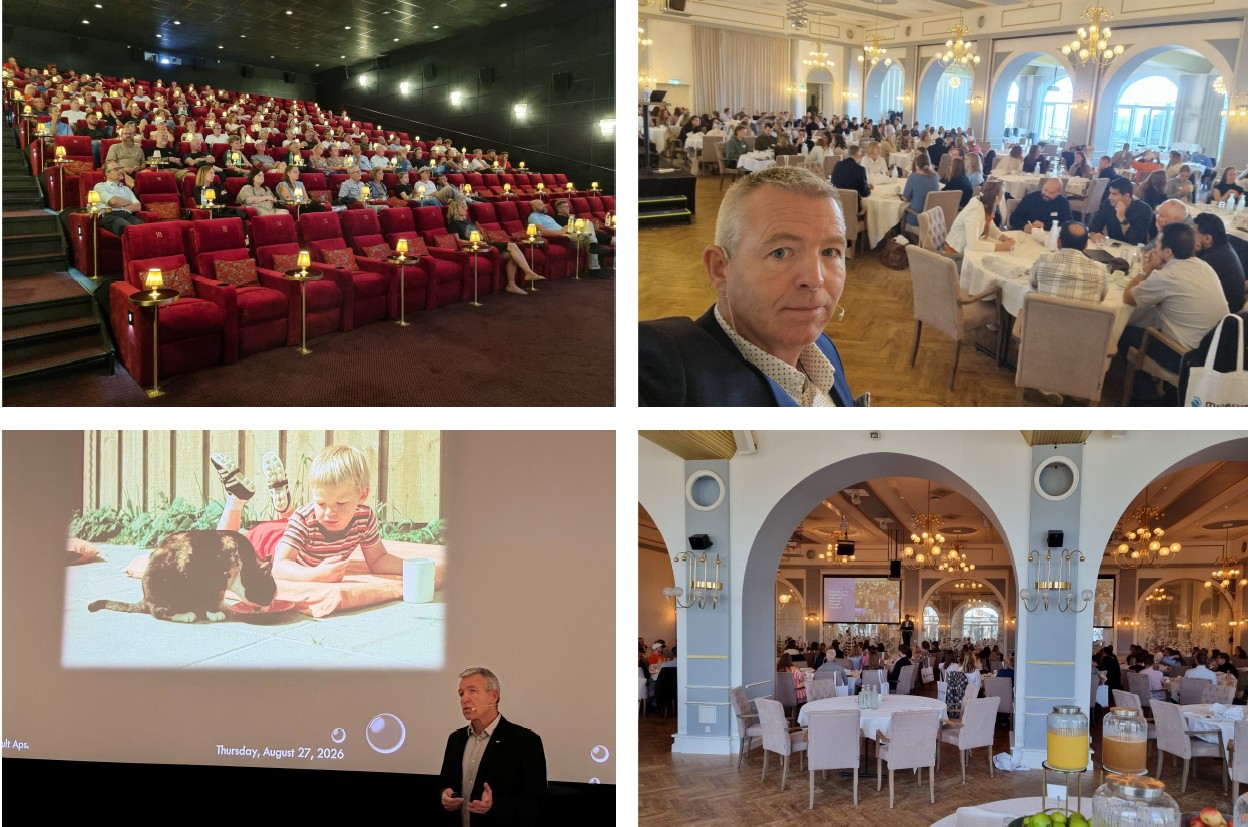
It was delivered in English at Marienlyst in Helsingør for around 200 employees – including 16 leaders, several of them relatively new to leadership, the C-level leadership and employees from across the organisation. It was, in other words, a large company-wide intervention.
From feedback activity to feedback culture
The aim was not simply to teach people how to give feedback. The broader cultural shift was from passively waiting to receive feedback to actively asking for useful feedback as part of one's own learning and development – an ask-first feedback culture.
Culture develops through behaviour that is practised and repeated – not through communication about the desired culture alone. That is why the intervention combined insight with practical training.
Lead by Example
Leadership role-modelling was an important starting point. The programme connected feedback culture with leaders' willingness to demonstrate openness, acknowledge blind spots, invite feedback and show that learning also applies at senior level.
C-level participation helped to establish psychological safety and to signal that feedback is relevant throughout the organisation. The principle is simple: a feedback culture becomes stronger when leadership visibly takes part in it.
What is feedback? Psychological safety and self-awareness
The intervention distinguished feedback from criticism. Feedback was framed as information that can support learning, self-awareness, new options for action, stronger professional dialogue and organisational learning – “information from the past, shared in the present, for use in the future.”
Feedback was linked to psychological safety: feeling listened to, knowing that feedback will not be used against you, blind spots, curiosity, awareness of one's own reactions and remaining constructive when feedback becomes difficult.
Participants reflected on how they typically react when receiving feedback – for example by interrupting, explaining, defending, listening or asking questions. The purpose was to increase self-awareness and enable better choices in future feedback situations.
The ask-first approach
A central practical element was training people to ask for useful feedback rather than only waiting for unsolicited feedback. Participants learned to be specific, describe their learning goal, invite a nuanced perspective and use follow-up questions.
- “What is one thing I could do to improve how I handled this?”
- “Where did my approach work – and where did it create resistance?”
- “What else?” – and “What could that look like in practice next time?”
Practical behavioural training
The intervention combined theory with practical training: a theoretical introduction, an interactive live poll, individual reflection, dialogue around the tables, exercises in pairs and small groups, simultaneous role-plays, plenary dialogue, feedback tools and a personal commitment after the workshop.
Participants practised asking specifically for feedback and worked with Start – Stop – Continue. The workshop also addressed the difficult questions: how do we handle emotions when feedback becomes difficult? And how do we respond when we fundamentally disagree with the feedback we receive?
The feedback toolbox
1. Reflection sheet
Awareness of one's own typical reactions to feedback.
2. The “ask” checklist
Be specific · describe the learning goal · invite a nuanced perspective · ask follow-up questions.
3. Start – Continue – Stop
A simple structure for giving and asking for feedback that can be turned into action.
4. Principles for the person giving feedback
Be specific · focus on behaviour rather than personality · keep it balanced · base it on your own observation and experience · give feedback close to the situation · give feedback when you are in balance yourself.
From workshop to action
The intervention ended with a concrete personal commitment. Participants considered: “Who will I ask for feedback during the next seven days – and about what?”
The question was the action prompt at the close of the programme – designed to bridge learning and everyday behaviour. It is not documented to what extent individual participants subsequently carried out the action.
The client's statement
After the intervention, an HR Business Partner at Minerva Imaging wrote the following. The assessments are the client's own.
“Thank you for a really good session on Friday. We have already received very positive feedback, which is of course extremely encouraging. We look forward to taking a closer look at what you have sent us and to continuing the development of our learning culture.”
What the case demonstrates
The case demonstrates Cronquist Consult's experience with culture development and organisational development in a knowledge-intensive specialist organisation: feedback and learning culture, support for performance management, psychological safety, leadership role-modelling, large-group facilitation and practical behavioural training that turns a cultural ambition into concrete practice.
The case documents the content and scale of the intervention and the client's immediate feedback. No measured effects on behaviour, psychological safety, performance or culture are documented, and the case claims none.
Related services
Want something similar in your organisation?
Tell us briefly about your situation and we will come back with a proposal for a programme — plus a free 30-minute intro call.
Book an intro call