Insights · Method
3H – Head, Hands and Heart: From Learning to Lasting Behaviour Change
3H is a core principle in Cronquist Consult’s leadership and team development. The Head focuses on understanding and reflection, the Hands on practical training and action, and the Heart on engagement, relationships and emotions. When all three are brought into play and practised over time, learning is more likely to become new behaviour in everyday work.
What is 3H?
Lasting development happens when people understand, act and engage emotionally. Cronquist Consult therefore works with
- the Head through reflection and dialogue,
- the Hands through practical tasks and training, and
- the Heart through engagement, relationships and emotions.
When the three areas are addressed at the same time, repeated and practised over time, learning is more likely to become new behaviour in everyday work.
HEAD
Understand & reflect
Knowledge · reflection · dialogue
HANDS
Do & practise
Practice · exercises · action
HEART
Feel & engage
Relationships · emotions · motivation
Lasting behaviour change
- Repetition + practice + time
- Application in everyday work
- Impact in the organisation
The Head – understand and reflect
Development often begins with understanding. What is happening? Why is it happening? What does it mean for me as a leader, for my team and for the organisation I am part of?
The Head represents knowledge, reflection and dialogue. New perspectives and models can create insight, but reflection only becomes genuinely valuable when it is connected to the leader’s own reality.
That is why we do not work with theory alone. Participants have to translate it into concrete situations, relationships and leadership challenges from their own working day.
The Hands – do and practise
Knowing what you ought to do is not the same as being able to do it.
The Hands therefore represent practice, exercises and action. This may be practising a difficult conversation, feedback, customer orientation, collaboration, decisions or a specific leadership challenge.
People need the opportunity to try, fail, adjust and try again.
A substantial part of Cronquist’s development programmes therefore takes place through practical tasks and training – both during the programme itself and between modules in the participants’ daily work.
The Heart – feel and engage
People rarely change their behaviour simply because someone tells them to.
The Heart represents relationships, emotions, motivation and engagement.
Development has to feel relevant. Something has to be at stake. And people need to be able to see the point of the change they are expected to be part of.
3H therefore also works with the emotional dimension of leadership and collaboration: the relationship with others, the motivation to act and the courage to actually do something differently.
When Head, Hands and Heart work together
The three elements cannot replace one another.
Head without Hands can end up as insight without action.
Hands without Head can become activity without understanding.
Head and Hands without Heart can produce correct behaviour in the training room without necessarily creating the engagement needed to sustain it afterwards.
3H is therefore about bringing all three areas into play:
Understand → Do → Engage → Repeat.
The goal is not learning for its own sake. The goal is that the learning can be translated into behaviour in everyday work.
Repetition + practice + time
A single course can create inspiration and insight. But lasting development usually requires more.
Repetition, practice and time are therefore a central part of 3H.
Participants work with concrete situations from their own everyday work, try out new behaviour, reflect on their experience and practise again. Buddy sparring, homework assignments, coaching, feedback and specific business cases may be included depending on the programme.
This is also why many of Cronquist Consult’s leadership development programmes are module-based and run over a longer period of time.
A single module can create insight. Lasting behaviour change requires practice, repetition and time.
3H in leadership development
In leadership development, 3H means that participants are not only introduced to leadership tools.
They also work on their own role as a leader and on real leadership challenges from the organisation.
This applies, for example, to middle management development, where the move from professional expertise to leading people often requires new understanding, concrete practice and personal involvement. The same principle runs through our broader work with leadership development.
3H in team development
The same principle applies to teams.
A team does not necessarily improve simply by being able to describe what good collaboration is. The team needs to talk about its own behaviour, practise new ways of working together and create shared engagement in the standards it wants to work to.
This is where the connection between 3H and Shared High Team Standards begins.
Read more about how this is applied in practice under team development.
From 3H to everyday work
The decisive test does not come on the course day.
It comes on Monday morning.
Is the feedback actually given? Is the difficult conversation held? Does the team work to the agreed standards? Is the customer involved differently? And are strategic decisions translated into action?
The learning therefore has to be as close as possible to the reality in which it is subsequently to be applied.
- Head + Hands + Heart
- Repetition + practice + time
- Application in everyday work
- Impact in the organisation
Experience from real-world programmes
The 3H principle can be recognised in the way Cronquist Consult has worked with long-term leadership development over many years.
At e-conomic, for instance, new middle managers have worked in company-tailored, module-based development programmes covering practical and personal leadership, customer orientation, feedback, coaching and concrete leadership challenges.
At Christiansen & Essenbæk, long-term leadership training has supported the move from professional leadership to leading people.
And at Umbraco, in-house leadership development has been delivered in an academy format including practical and personal leadership, JTI, customer orientation, buddy sparring, coaching and business cases.
These are not three identical programmes. That is precisely the point: the principle can be applied differently depending on the company’s people, reality and goals.
3H in Fremtidens Lederberedskab
3H was also the training method running through the non-commercial project Uddannelse Til Mig – Fremtidens Lederberedskab.
Across two school years, a total of 32 young people took part. Each group combined weekly homework training with five character-building outdoor modules. Together, the five modules spanned a total of 20 days at our basecamp, on Anholt, and in Sweden, Austria and Bosnia – destinations and learning environments where OLTC also runs leadership courses.
The participants were not simply to hear about collaboration, responsibility, resilience and leadership. They were to experience it, act in it and afterwards reflect on it. In that way, Head, Hands and Heart were brought into play at the same time.
The programme moved from basic outdoor training and personal preparedness, through collaboration and team development, to resilience, determination, leadership and high performance.
The purpose was not to train young people to become business leaders. It was about something more fundamental: strengthening their ability to take responsibility for their own lives, work with others, reflect on their own choices and act when things became difficult.
Fremtidens Lederberedskab thereby illustrates a central principle in 3H: development is not only about what people know. It is also about what they do and what they engage in.
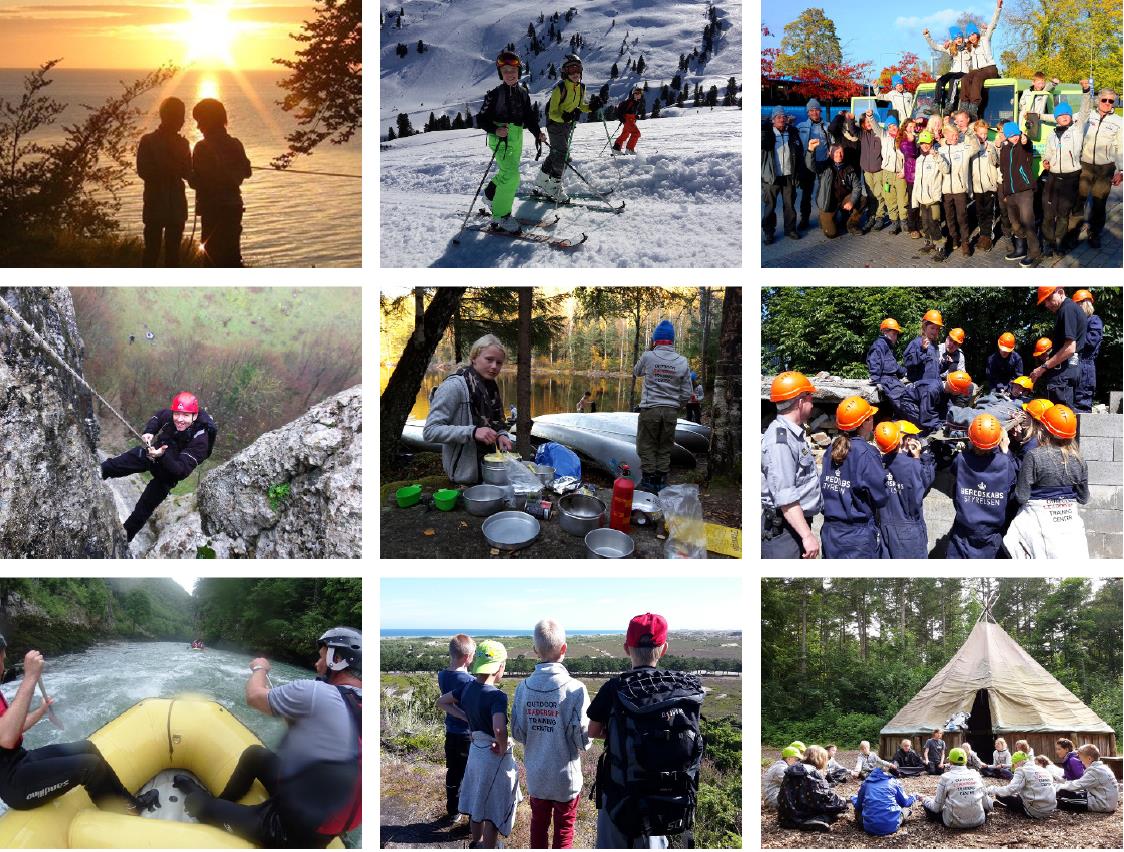
See 3H put into practice
3H in OLTC
3H is also used in OLTC’s practical outdoor-based team and leadership training. Here, reflection and dialogue are combined with practical exercises, action and personal engagement.
The demanding learning environment is not an end in itself. It provides a setting in which participants can practise behaviour, collaboration and leadership and subsequently reflect on their experience.
This brings Head, Hands and Heart into play in a different learning environment while following the same underlying principle.
From people to organisations
3H starts with the individual, but the ambition does not stop at individual learning.
When people change the way they lead, collaborate, communicate and act, it can affect the organisation they are part of.
That is the background for Mads Cronquist’s long-standing mantra:
“An abundance mindset creates profit on the bottom line.”
A leadership perspective – not evidence that 3H in itself creates a particular financial effect.
Frequently asked questions
- What does 3H stand for?
- 3H stands for Head, Hands and Heart: reflection and understanding, practical training and action, and engagement, relationships and emotions.
- What is the purpose of 3H?
- The purpose is to increase the likelihood that learning does not stop at new knowledge, but is translated into new behaviour in everyday work through the combination of understanding, action, engagement and practice over time.
- Is 3H a personality test?
- No. 3H is a principle for learning and development. Personality tools such as JTI may form part of a development programme, but they are not the 3H model itself.
- Can 3H be used in team development?
- Yes. In team development, 3H can be used to connect reflection on the team's collaboration with concrete practice and shared engagement in the behaviour the team wants.
- How is 3H used in leadership development?
- By combining leadership knowledge and reflection with practical leadership tasks, feedback, training and work on the participants' own relationships and challenges.
- Why does development take place over time?
- Because insight does not necessarily lead to new behaviour. Repetition, practical application, feedback and time increase the likelihood that the learning is applied and sustained in everyday work.