Insights · 1 October 2026
From “Dream Team” in Bosnia
to High Performance Teams
What a Danish mobile hospital during the war taught me about mission, readiness, collaboration and the ability to create results that exceed every expectation.
This story is based on my own experiences from the Danish Mobile Hospital (DMH) and my subsequent work with leadership, readiness and High Performance Teams.
A mission greater than ourselves
Some of the most important things I have learned about leadership, I learned long before I put names such as High Performance Teams, SHTS, 3H or Inner Readiness to them.
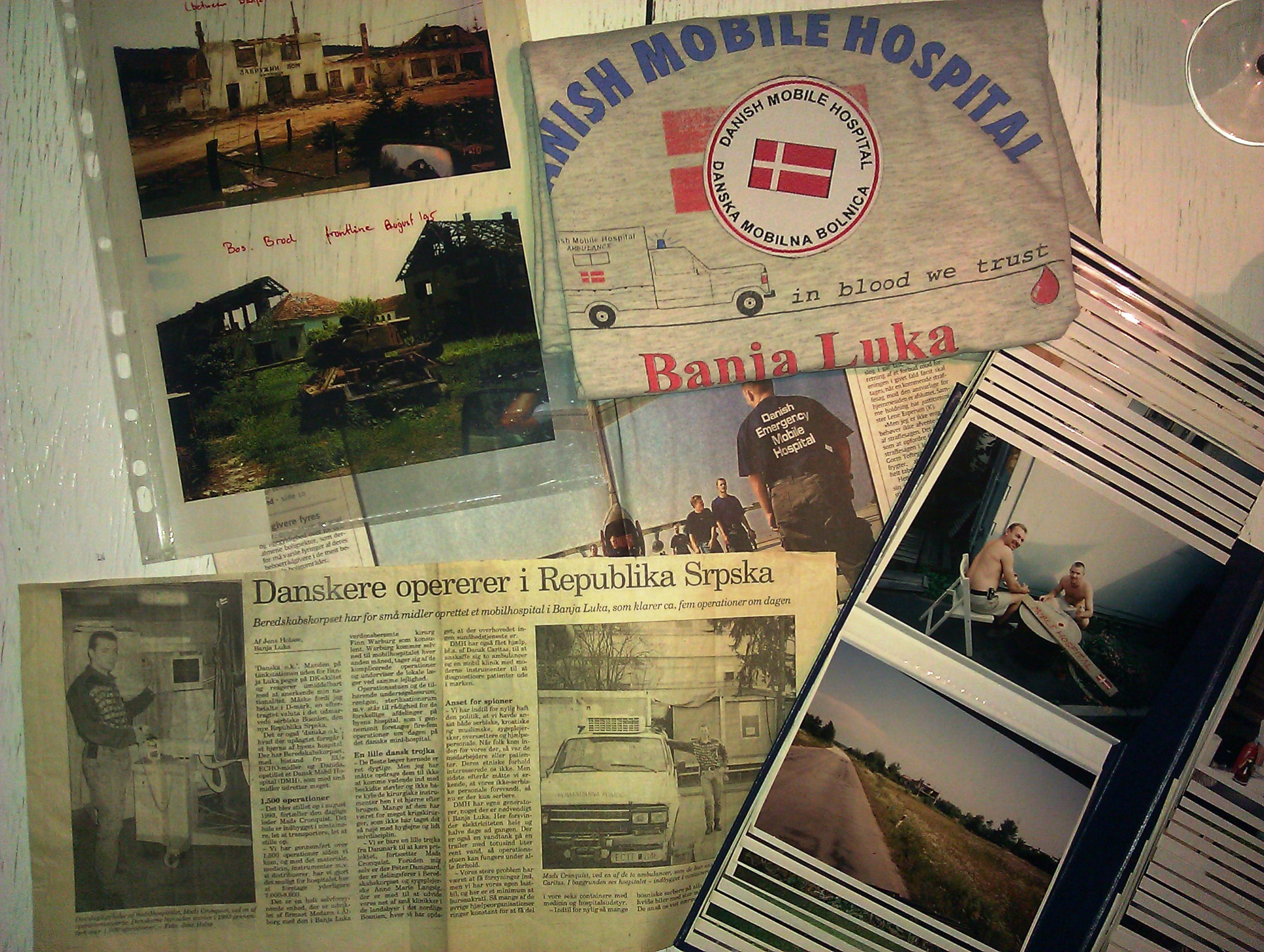
In June 1995, I arrived in Banja Luka in Bosnia in the middle of the war, in the part known as Republika Srpska. At the time, I was Head of Training at the Greater Copenhagen Emergency Management Agency and was seconded to a joint humanitarian project: the Danish Mobile Hospital - DMH.
The idea for DMH was created by physician and war surgeon Dr Med Finn Warburg, who had worked with mobile hospital solutions through his company Medana. The project was established as a collaboration between Caritas Denmark and the Greater Copenhagen Emergency Management Agency and was primarily funded by ECHO, the EU's humanitarian office.
Finn later became one of my good friends and one of the mentors who taught me the most about leadership. His many years as a war surgeon in conflict zones around the world are described in his memoir "I fulde åndedrag", which also includes DMH.
Another key person was "Little" Kurt Hansen, a former soldier in the Danish Jaeger Corps, who built the hospital itself. Kurt and I worked together in Bosnia several times. Sadly, he died in March 2026, shortly after his 80th birthday.
But the most important protagonist in this story is not really one person. It is the team.
At DMH, I experienced what can happen when people take action and unite around a mission greater than themselves.
From logistics responsibility to project leadership
For roughly the first six months, I was responsible for technical matters and logistics and was part of a very small Danish management team together with Knud, a Danish criminal police officer who served as project coordinator. DMH had several teams over the approximately five years the hospital operated in Bosnia, working on a rotation basis.
Being "responsible for logistics" may sound modest. In a war zone, however, logistics was a prerequisite for the hospital to function at all. Medicine, spare parts, fuel, vehicles, communications, repairs and supplies had to move through an area with checkpoints, unpredictability and a front line that could change the situation at any time.
When Knud returned home, I took over overall responsibility for the project. Another Danish colleague joined my team, and the project was later expanded with an extensive Primary Health Care programme funded by Danida / the Danish Ministry of Foreign Affairs. A Danish nurse was given responsibility for this part.
The expansion meant that our efforts extended far beyond the hospital itself: mobile medical clinics, field nursing, ambulance services and healthcare initiatives in areas around the former front line, often far from the larger towns.
Around the small Danish team was a much larger group of local employees: doctors, nurses, administration, logistics, interpreters and many others. One of them was Zeljko, who became my right-hand man and later a very good friend.
Almost two decades later, in 2013, Zeljko and I founded OLTC together. Today, we take Danish leadership teams - and young people participating in the "Future Leadership Readiness" project - back to the area to train leadership, effective teamwork and personal readiness.
For me, that connection matters: the experiences from Bosnia were not left behind in Bosnia.
They called themselves "Dream Team"
DMH was staffed by people from different ethnic and cultural backgrounds in a society where the war had just made differences a matter of life and death. Yet the employees worked together around one shared task: delivering life-saving treatment to people.
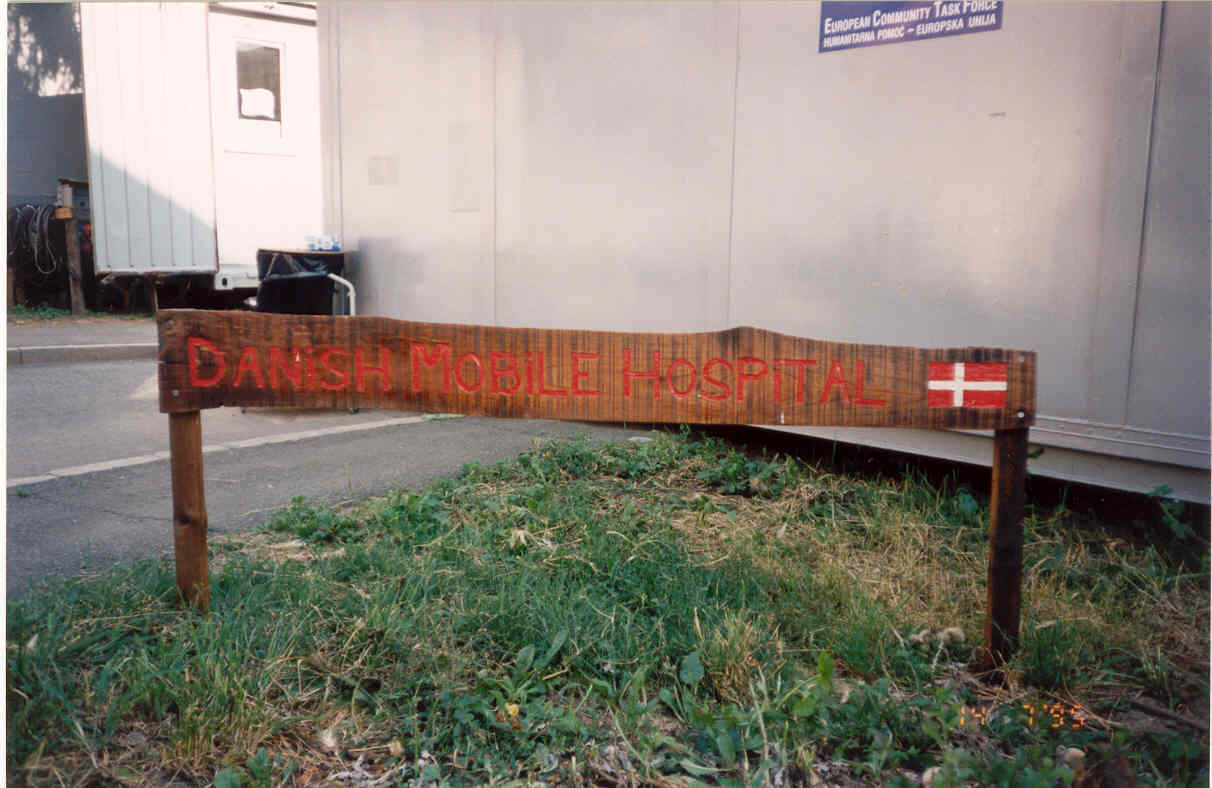
They began calling our combined team a "Dream Team". A photograph of all of us was hung on the wall at the entrance to DMH under that heading.
That heading has stayed with me ever since.
When I work with High Performance Teams today, I often return to one simple question: What enables people to move from being a group of capable individuals to becoming a team in which the whole performs at a level greater than the sum of its parts?
At DMH, the answer was not a course, a model or a set of PowerPoint slides. It began with a shared mission.
The mission mattered so much that people accepted a risk which, in the most extreme case, could cost them their lives. That kind of situation should of course neither be romanticised nor replicated in business, but the underlying mechanism is worth understanding.
A team becomes stronger when people experience the task as greater than their individual interests - and when they know why their contribution matters to others.
Plan B is part of the plan
My background as an emergency management officer taught me that a plan is not the same as certainty.
When a firefighter enters a burning building to save lives and property, he or she does not enter with only one idea of how the task will be solved. There must be a mental overview of alternatives: What do we do if the access route disappears? If the fire develops differently? If communications fail? Where is the alternative escape route?
It is about being ready to be ready.
Military history contains the often-quoted point that no plan survives first contact with reality. I recognise that experience from emergency management, Bosnia and, later, strategy work in companies.
Strategy execution is therefore not simply about following a plan with discipline. It is about maintaining the intent while being able to change the actions when reality changes.
Later, during my CBA studies, I found inspiration in Stephen Bungay and his work The Art of Action. I use that thinking today in my work with, among others, C-level teams: clear direction, freedom to act close to the situation, and the ability to adjust without losing the shared intent.
It is also an important part of what I later conceptualised as Inner Readiness: an inherent human source of strength and a mindset of surplus capacity that can be activated when it really matters.
Improvisation is not the same as randomness
One episode illustrates this very concretely.
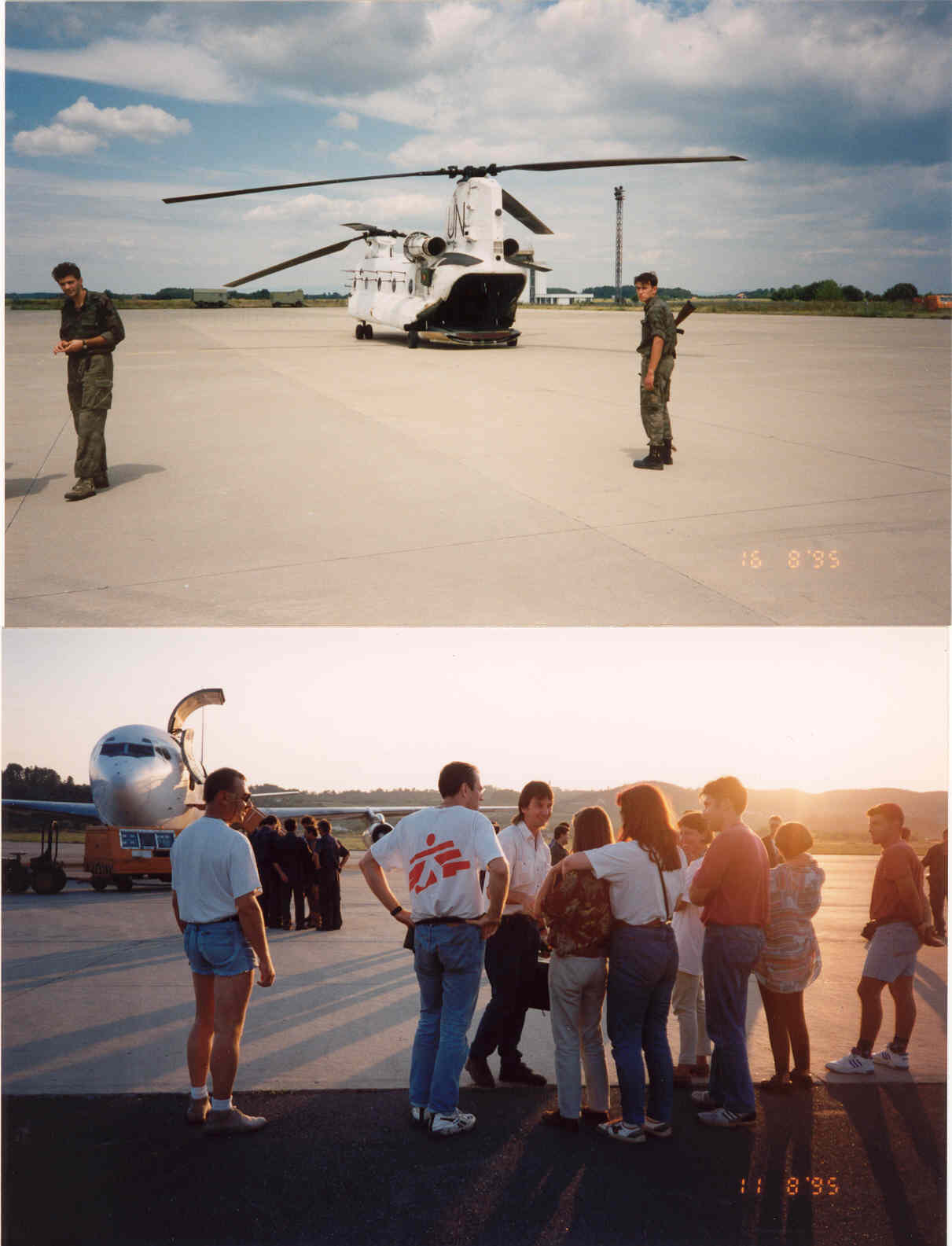
At one point, I was due to fly home from Bosnia via Amsterdam on an MSF-H humanitarian relief aircraft. Knud was to continue the work, and on the drive to the airport a very practical problem arose: he needed to be able to drive the truck. So, on the way, I had to teach the Danish criminal police officer to drive a truck - in 30 minutes. He later actually obtained Danish licences for both trucks and buses.
The story is almost comical.
But shortly afterwards, the seriousness became clear. When the cargo aircraft took off from Banja Luka, it climbed steeply and turned sharply to the northeast. I spoke with the captain, who explained that they had to avoid a specific airspace. On the inbound flight, the aircraft had been threatened with being shot down. Aviate - Navigate - Communicate is a fundamental principle I later learned myself as a pilot.
For me, the two images belong together.
Being able to improvise does not mean working randomly. Quite the opposite. Good improvisation requires competence, situational awareness, trust and a shared understanding of the task.
Only when the foundation is in place can people act quickly without having to wait for detailed instructions. That applies both in the cockpit and on the ground.
Leadership across organisations and cultures
No organisation could solve the task alone.
At DMH, we worked across and with a wide range of humanitarian organisations and authorities. Coordination took place by radio, in meetings and very concretely out in the field.
When the situation changed, the organisation's logo on the door always became less important than the answer to the question: Who can solve which part of the task now? Because: We solve the task, even when the responsibility is not necessarily ours.
At times, the pressure became extreme. According to our contemporary records, around 150,000 refugees arrived in the Banja Luka area in approximately 14 days. Chaos, desperate people, hunger, illness, death. Supplies, transport, healthcare and coordination all had to work at the same time. That places ultimate demands on leadership and coordination of the response.
After my first year around DMH, my international experience expanded further. I was recruited into logistics leadership roles for MSF-Holland and the German Malteser Hilfsdienst. In 1996, I also worked in Japan for Finn Warburg's company Medana on the development and design of new mobile hospital units for earthquake disasters.
Here I worked with a C3i unit - Command, Control, Communication and Intelligence - in practice a command centre where information, communication, decisions and the efforts of different actors can be coordinated.
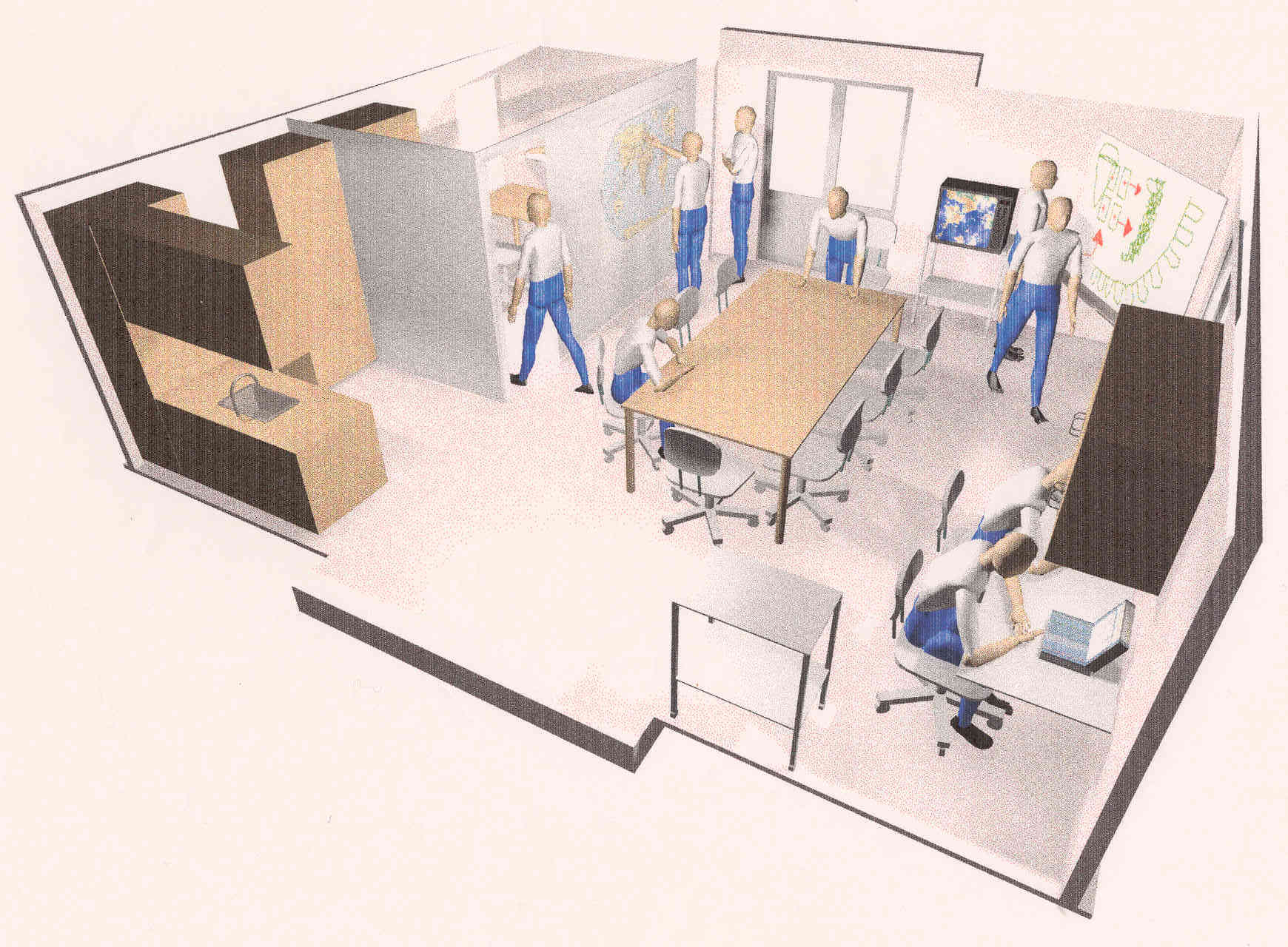
When I work with cross-functional and horizontal leadership in companies today, the context is of course entirely different. But the problem is recognisable: results are often created between organisational units, not within just one of them.
From extreme conditions to civilian leadership
It would be wrong to claim that my current leadership models were "invented in Bosnia". They were not.
But the roots are clear.
The idea behind Inner Readiness stems directly from my background and work as an emergency management officer - including my time in Bosnia. It is about the ability to maintain situational awareness, the capacity to act and human balance when reality changes.
Shared High Team Standards - SHTS and 3H - Head, Hands, Heart were first conceptualised later in my work as a consultant at Cronquist Consult and developed and refined together with clients (and their clients: the leadership and team behaviours they particularly value being exposed to).
These models and concepts nevertheless have experiential roots in something I had seen at close range: teams that had to function under difficult conditions, where trust, behaviour, professional competence and shared direction were not abstract concepts but decisive for the outcome.
It is precisely that translation that interests me.
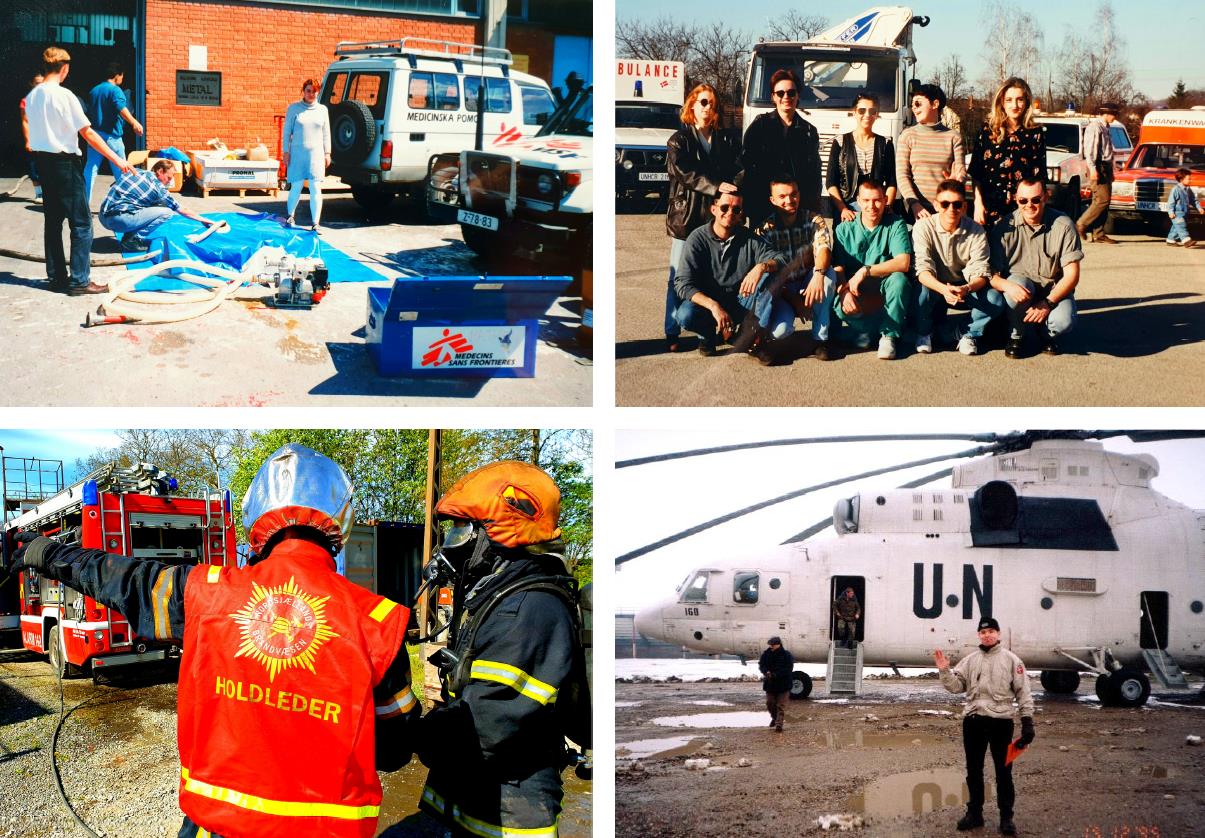
We should not try to turn an ordinary company into a war zone. We should understand the human mechanisms that make people take responsibility for one another, act independently within a shared direction and deliver extraordinary results together - and then create the conditions for those mechanisms to thrive in a civilian organisation.
High Performance is not a model
After more than 30 years of working with leadership and teams, I have become increasingly convinced of one thing:
High Performance does not arise because a leader introduces a model.
Models can help us understand, train and develop the behaviours that work. But before the model come the people - the people who drive the business forward through the terrain towards ambitious strategic goals.
There must be a mission that makes sense. Trust must be built gradually. People must hold one another mutually accountable while understanding the whole. They must dare to communicate when something is going wrong. They must be able to act when the plan no longer fits reality. And they must have a shared standard for how they will work together - including when the pressure rises.
That was some of what I saw in the team in Bosnia that chose to call itself Dream Team.
The results of the work at DMH speak for themselves. In fact, we at DMH were awarded the EU Medal of Merit for extraordinary humanitarian effort. More importantly, however, during its “lifetime” DMH carried out more than 2,000 successful operations and enabled approximately 8,000 additional operations elsewhere - with relatively limited resources.
Towards the end, we converted DMH to reconstructive surgery and donated much of the hospital to various actors in the city. The rest came home, was further developed, deployed again and again in new versions and with new teams. Today it is operating in Ukraine and has had an Emergency component added: DEMH.
I have spent a large part of my working life - both as an executive in many different roles in business and as a consultant in my own company - exploring how the same fundamental mechanisms can be translated into leadership teams, companies and organisational cultures where the task is different, but the need for strong teamwork is the same.
Because High Performance is not an end in itself.
The decisive question is always: What does the way we work together create for those we exist to serve? Do we deliver when it really matters?
In a company, that includes customers, employees and the business. In a hospital during a war, the consequences were more directly visible.
But the ambition can be stated simply:
To create a team that together delivers results so good that they exceed every expectation.
Epilogue: Returning to Bosnia
When Zeljko and I established OLTC - Outdoor Leadership Training Center - many years later, a new connection between past and present was created.
Today, I can take Danish leaders and young people back to an area where some of my own most formative leadership experiences were created. Not to play at war and not to copy the past, but to use a different environment to make leadership tangible and to practise it.
For me, that may be the most important legacy of DMH.
Leadership is not learned simply by reading about it, reflecting and debating. Leadership becomes real when people have to turn intention into action, when they depend on one another, and when everyone afterwards dares to examine and talk honestly about why something succeeded - or did not.
We can learn from our successes and find the pattern that recurs when we function at our very best together despite any circumstance or challenge. We can identify the driving forces in the passionate people who, together, can create an organisational firestorm towards a truly ambitious goal.
All of this began for me long before I had names for the models - including those I had not yet invented myself.
It all began with an important shared task - and a Dream Team in Bosnia.
About the author
Mads Cronquist is Founder and Principal Consultant at Cronquist Consult and has more than 35 years of leadership experience from a varied civilian business career across different industries. His roles have included operations manager, HR director, sales manager, business development manager and project manager. He combines practical leadership experience with a Certificate in Business Administration (CBA), specialising in strategy and innovation, as well as further education in business psychology. He is the author of the book “Lederens inspirationsguide” (“The Leader’s Inspiration Guide”), written at the conclusion of the development project “Trivsel - 360 grader”, for which he was project manager. The project won the 2012 Working Environment Award in the category “Working Environment as a Strategic Element”, and Christiansen & Essenbæk also won the CSR Communication Prize at the 2012 CSR Awards and was nominated for both the CSR People Prize -100 and CSR Strategy-100. Today, through Cronquist Consult, he works with leadership development, team and organisational development, strategy and execution, and executive coaching.
Read more about Mads Cronquist: cronquist.dk/en/mads-cronquist
Cronquist Consult: www.cronquist.dk/en