Poul Sejer Nielsen Service A/S: leadership development, executive coaching and customer loyalty as a management tool
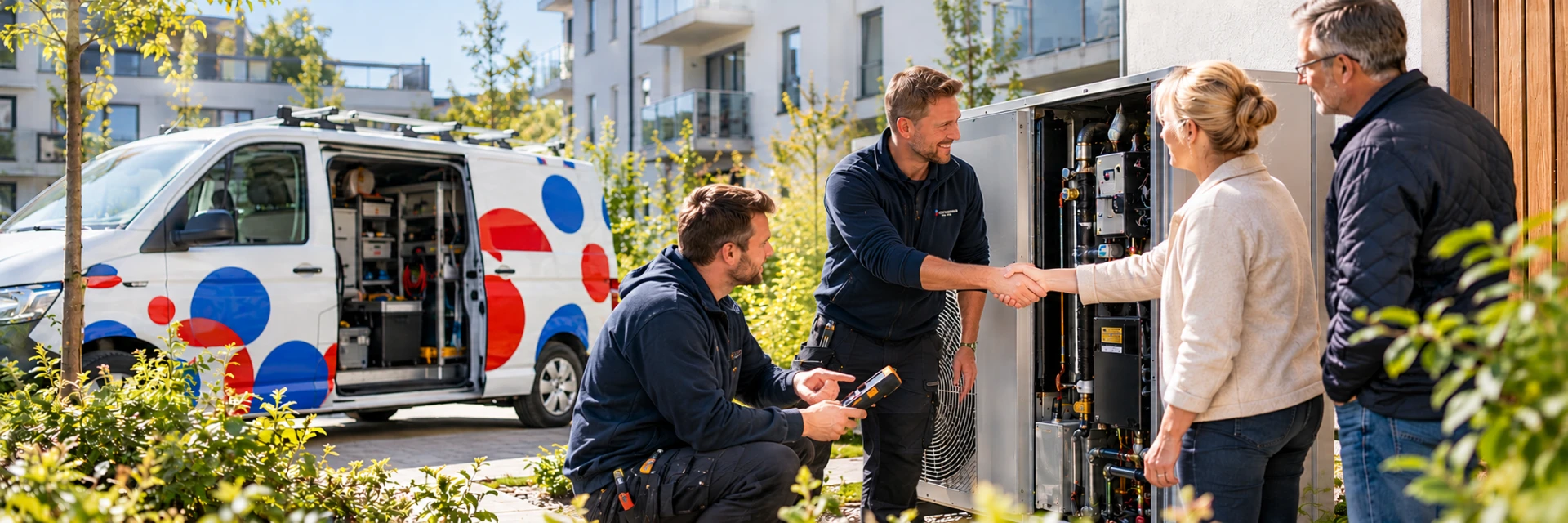
Poul Sejer Nielsen Service A/S (PSN) is a service company where value is created at the customer site, every day, by employees and service managers close to the work. The collaboration has therefore not been a single course, but several connected activities: team days and team building, 1:1 executive business coaching with the CEO, an intensive leadership programme for eight service managers, and an in-depth customer loyalty study among 20 of the company's customers.
The challenge
In the service industry both customer satisfaction and earnings are decided out on the job — by the individual service manager and their team. For the company to grow, the management layer needs more than a working roster: it needs to lead itself, lead its team, communicate clearly and understand what the customer actually experiences as value.
At the same time the owner-management needed space to work on direction, priorities and its own leadership behaviour — and a tool that could turn customer loyalty into something you steer by rather than something you guess at.
The assignment
- Team days and team building for employees and managers.
- 1:1 executive business coaching with the CEO.
- An intensive, modular, hands-on leadership programme for eight service managers, run over six months.
- An in-depth customer loyalty study among 20 PSN customers, linked to financial profitability.
Executive coaching with the CEO
In parallel, 1:1 executive business coaching was delivered with the CEO. The coaching worked on the company's own live decisions: direction, priorities, leading the leaders, and how strategy was translated into something the service managers could act on.
It is that combination — top management and the management layer in the same effort — that keeps a leadership programme from becoming a side project and makes it the way the company is run.
The leadership programme for the service managers
The programme was built as four modules across six months, leaving time to try new behaviour in daily operations in between. It opened with a kick-off and a 45-minute individual interview with every participant, and closed with a practical examination in M4, where the managers demonstrated what they had learned on their own real assignments.
M1
Personal Leadership
Completed
Personal leadership and team development — JTI and the Z model, leading yourself, the change wheel, the behaviour triangle, success analysis, shared outdoor cooking and a morning run.
M2
Leadership in Practice
Completed
Leadership in practice — the responsibilities and obligations of the leadership role, practical exercises in leading teams, the SILK and ROSE models, communication in theory and practice, and peer feedback. The module was partly split between new and experienced service managers.
M3
Customer Value and Service
Completed
Customer value and service — the concept of value, Customer Deep Dive, visits from the company's own customers, the EFU and BALA tools, and case presentations in buddy pairs.
M4
Practical Examination
Completed
Examination on a real-life assignment, follow-up and evaluation.
- Kick-off, individual interviews and a JTI questionnaire before the first module.
- Between modules: a buddy system, written assignments, 45 minutes of 1:1 coaching and 45 minutes of sparring in buddy pairs.
- M1 and M2 were run as residential modules with work both indoors and outdoors.
Customer Deep Dive: customer loyalty connected with profitability
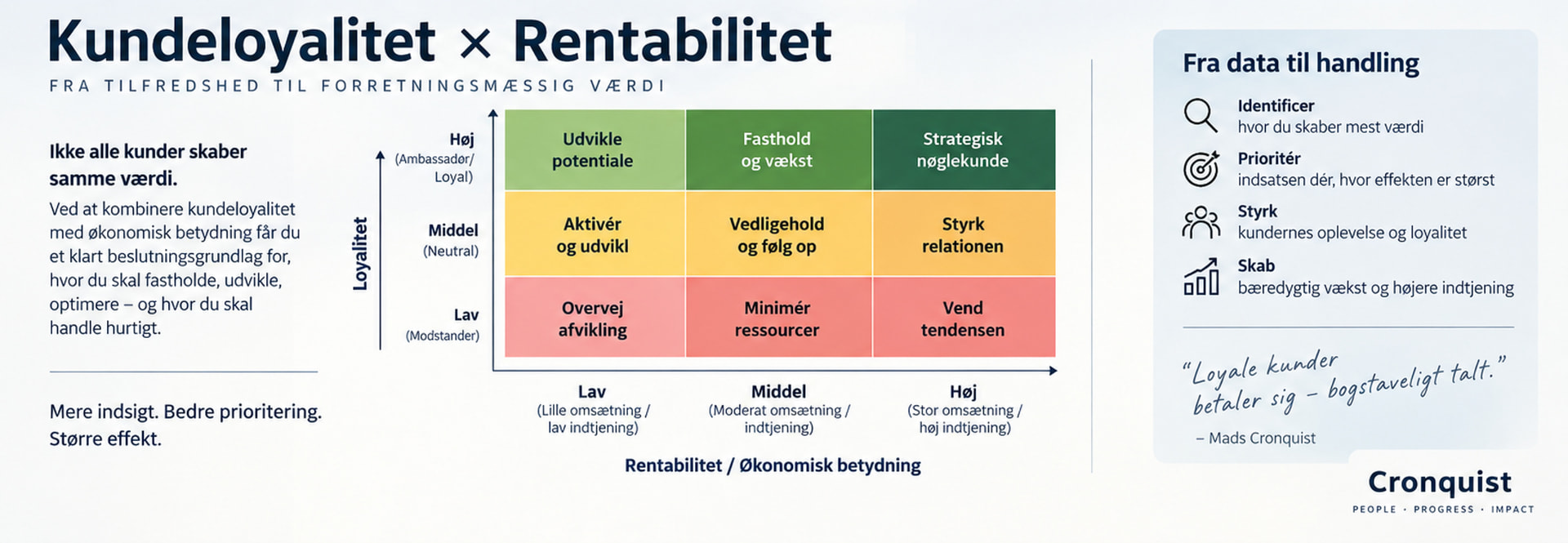
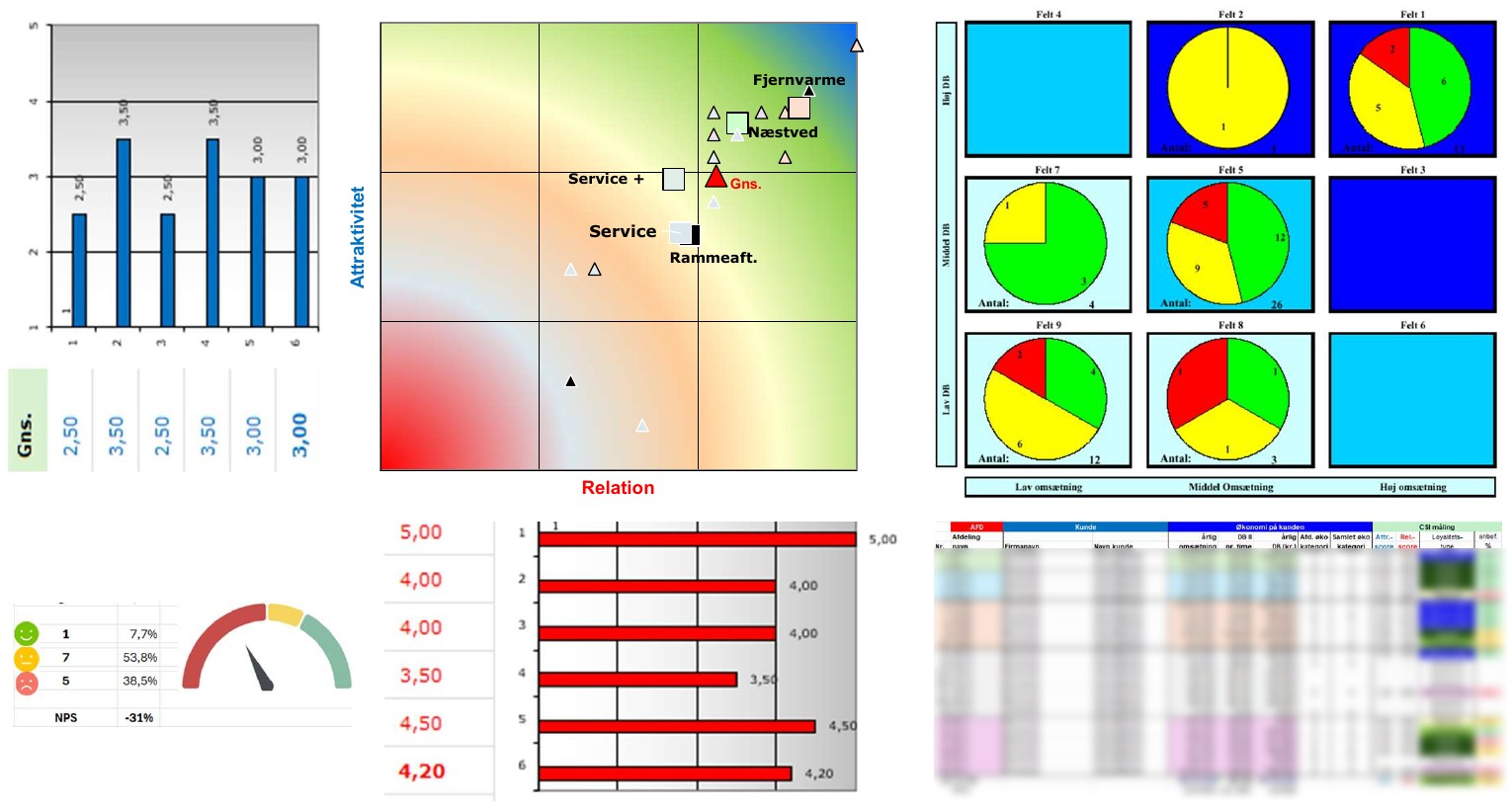
The customer analysis was part of Cronquist Consult's Customer Deep Dive — the LISTEN / Customer Analysis solution. Customer insight becomes a stronger management tool when it is connected with the economic significance of customer relationships. In the Customer Deep Dive analysis, customer insight and loyalty were therefore considered alongside profitability to provide a stronger basis for prioritisation.
The analysis included structured interviews with 20 customers. The purpose was not simply to measure satisfaction, but to create a more nuanced view of where customer relationships should be maintained, developed or prioritised.
The logic is simple: understand customer experience and loyalty → combine it with relevant business and economic information → create management information → support prioritisation. The result can serve both as a strategic steering tool for management and as an operational management instrument for service managers, who can see what their own customers value most.
- 1Customer experience, relationships and loyalty
- 2Customer profitability and economic significance
- 3Management information
- 4Prioritising commercial efforts
Financial Performance
From 2023 to 2025, PSN Service A/S improved its profit before tax by more than DKK 15 million.
Source: Proff.dkRelated services
Want something similar in your organisation?
Tell us briefly about your situation and we will come back with a proposal for a programme — plus a free 30-minute intro call.
Book an intro call